Omics Longevity Protocol: Rewire Ageing with DNA
Longevity, Healthy Ageing, Precision Medicine
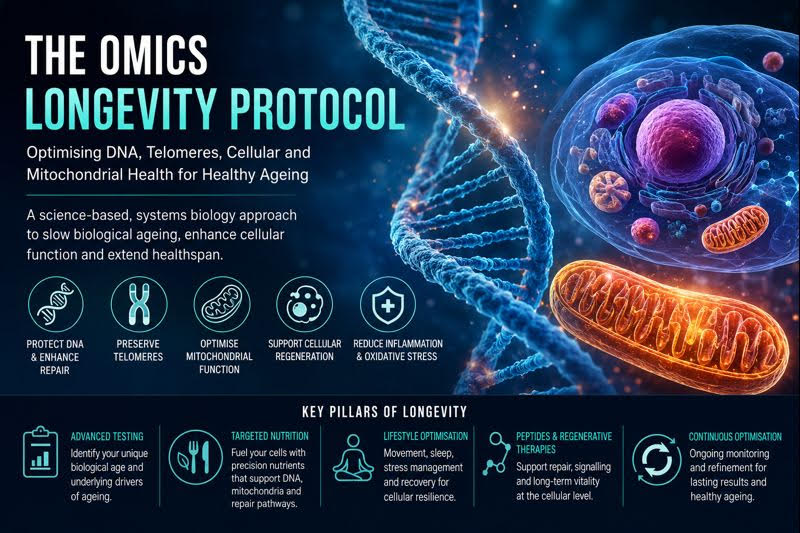
The Omics Longevity Protocol: Optimising DNA, Telomeres, Cellular and Mitochondrial Health for Healthy Ageing
Ageing is no longer viewed simply as the passing of time. Modern longevity science recognises ageing as a progressive decline in cellular efficiency, mitochondrial function, DNA integrity, and regenerative capacity. The emerging field of precision longevity medicine aims to slow biological ageing by targeting the root causes of cellular dysfunction before chronic disease develops.
The Omics Longevity Protocol is a next‑generation, systems-biology approach to healthy ageing. It uses deep biological testing to understand your DNA, telomeres, mitochondria, cellular environment, and regulatory networks, then builds a personalised plan to slow biological ageing and extend your healthspan—not just your lifespan.
Why Longevity Starts with Cellular Health
Every organ, tissue, hormone, and metabolic process in your body ultimately depends on the health of your cells. When cells can efficiently produce energy, repair DNA, control inflammation, remove toxins, and regenerate tissues, you are more likely to enjoy sharp cognition, resilient immunity, strong muscles, and a stable mood well into later life.
When cellular health falters, we see the hallmarks of ageing: chronic inflammation, mitochondrial decline, genomic instability, impaired detoxification, and the accumulation of senescent “zombie” cells that no longer divide but refuse to die. Over time, this decline contributes to fatigue, cognitive decline, hormonal imbalance, insulin resistance, cardiovascular disease, neurodegeneration, reduced immune resilience, and accelerated biological ageing.
📌 Key Takeaway: The Omics Longevity Protocol focuses on restoring optimal cellular function before irreversible degeneration occurs.
The Omics Longevity Protocol is built on a simple but profound idea: optimise the cell, and you optimise the organism. Rather than chasing symptoms organ by organ, it evaluates the interconnected biological networks that influence ageing, vitality, cognitive performance, and long‑term healthspan, and then uses precision tools to nudge those systems toward youthful performance.
What Is the Omics Longevity Protocol?
The Omics Longevity Protocol combines advanced functional testing, precision nutrition, peptide therapies, mitochondrial medicine, and lifestyle interventions to improve biological age and cellular performance. “Omics” refers to technologies that measure entire layers of biology at once—thousands of genes, proteins, metabolites, or microbial species in a single snapshot. Instead of guessing what might be going on inside you, the protocol uses these data‑rich tools to build a detailed map of how you are actually ageing. Key pillars include:
Genomics: your DNA blueprint—variants that influence longevity, detoxification, inflammation, cardiovascular risk, and how you respond to diet, exercise, and medications.
Epigenomics: chemical “tags” on DNA (like methylation) that switch genes on or off. These tags shift with lifestyle, stress, and environment and are the basis of modern biological age tests such as DNA‑methylation clocks and multi‑omics models like OMICmAge (Nature Aging, 2026).
Metabolomics: small molecules that reflect how you are processing energy—amino acids, sugars, organic acids, and more. Research on familial longevity shows characteristic metabolomic signatures in amino acid and lipid metabolism associated with extended healthspan (Leiden Longevity Study, 2026).
Proteomics: the proteins that carry out most cellular functions, including enzymes, receptors, and structural components. Shifts in proteomic patterns can signal early changes in inflammation, extracellular matrix integrity, and immune ageing long before symptoms appear.
Microbiomics: the trillions of microbes in your gut and on your skin. These organisms influence immunity, metabolism, mood, and even epigenetic marks through their metabolites and interaction with your immune system.
Lipidomics: the diverse fats in your body—membrane lipids, signalling molecules, and energy stores. Patterns in lipidomics data reveal how well your cell membranes function, how inflamed your tissues are, and how effectively you burn or store fuel.
By integrating these datasets, the Omics Longevity Protocol can identify where your biology is diverging from a youthful pattern and which levers will be most effective to pull—nutrition, exercise, sleep, peptides, regenerative therapies, or targeted supplements.
Optimising DNA and Telomeres: Guarding Your Genetic Core
Your DNA acts as the master blueprint for every cellular process, carrying the instructions for building and repairing your body. However, DNA is continuously exposed to damage from oxidative stress, chronic inflammation, environmental toxins, heavy metals, poor diet, UV radiation, chronic infections, emotional stress, and mitochondrial dysfunction. When DNA repair mechanisms become overwhelmed, mutations accumulate and cellular ageing accelerates.
📌 Key Signs of DNA Stress: fatigue and reduced resilience, accelerated skin ageing, increased inflammation, poor recovery, hormonal decline, neurodegenerative risk, and reduced mitochondrial output.
Genomic testing in the Omics Longevity Protocol looks for inherited variants that affect DNA repair capacity, detoxification enzymes, and antioxidant defences. With this information, your plan can prioritise specific nutrients and habits that support genomic stability—for example, extra folate and B‑vitamins for those with methylation‑related variants, or enhanced antioxidant and detox support for individuals with weaker endogenous defences. In this way, the protocol supports DNA preservation by improving cellular repair pathways and reducing oxidative stress.
At the ends of your chromosomes sit telomeres, protective caps that shorten each time a cell divides. When telomeres become too short, cells enter senescence or die. Large‑scale data from over 240,000 people show that shorter leukocyte telomere length is linked to higher cardiometabolic risk, certain cancers, and worse overall health (Nature Genetics, 2026). Excessive telomere shortening is associated with accelerated ageing, immune decline, cardiovascular disease, cognitive impairment, reduced regenerative capacity, and increased mortality risk.
Factors That Accelerate Telomere Shortening: chronic inflammation, oxidative stress, insulin resistance, poor sleep, sedentary lifestyle, psychological stress, smoking, and nutrient deficiencies.
The protocol’s telomere preservation strategies focus on both sides of this equation: reducing damage and supporting repair. Key elements include:
Lowering chronic inflammation and oxidative stress (discussed below), which otherwise chew through telomeres at an accelerated rate.
Supporting telomerase—the enzyme that can rebuild telomeres—through lifestyle, sleep, and targeted nutrients, while staying within safe, evidence‑based boundaries given telomerase’s complex role in cancer biology.
Addressing stress biology, as chronic psychological stress is repeatedly associated with shorter telomeres and dysregulated immune ageing.
Cutting‑edge research is also revealing how telomere maintenance involves not just DNA but RNA modifications and dynamic structures like T‑loops, which open and close to regulate access to telomerase (Nature Communications, 2026; Molecular Biology Reports, 2026). While these insights are still largely confined to the lab, they are shaping the next generation of therapeutics that the Omics Longevity Protocol keeps a close eye on, including future RNA‑targeted telomere therapies designed to stabilise telomeres without increasing cancer risk.
Mitochondrial Optimisation: Recharging Your Cellular Powerhouses
Mitochondria are often called the powerhouses of the cell because they generate ATP, the body’s primary energy currency. However, mitochondria do far more than produce energy. They regulate cellular metabolism, redox balance, apoptosis (programmed cell death), inflammation, hormone signalling, immune function, and key longevity pathways. Mitochondrial dysfunction is now recognised as one of the primary hallmarks of ageing.
Symptoms of Poor Mitochondrial Function: chronic fatigue, brain fog, exercise intolerance, slow recovery, muscle weakness, metabolic dysfunction, and accelerated ageing.
As mitochondria age, they produce more reactive oxygen species, less ATP, and become less efficient at handling metabolic demands—contributing to fatigue, muscle loss, brain fog, and increased risk of chronic disease. The Omics Longevity Protocol uses metabolomics, lipidomics, and functional testing to assess your mitochondrial health. Clues such as elevated lactate, impaired fatty acid oxidation markers, or specific acylcarnitine patterns can indicate where mitochondrial pathways are struggling.
Supporting mitochondrial efficiency is central to healthy ageing. A personalised mitochondrial optimisation plan may include:
Nutrients that support electron transport and ATP production, such as coenzyme Q10, riboflavin (B2), niacin (B3), alpha‑lipoic acid, magnesium, and acetyl‑L‑carnitine, tailored to your genomic and metabolomic profile.
NAD+ precursors (for example NMN, NR, or related compounds) to support cellular energy production, DNA repair, sirtuin activation, and mitochondrial biogenesis where appropriate and supervised.
Time‑restricted eating or intermittent fasting windows, which encourage mitochondrial biogenesis and metabolic flexibility when appropriate for your health status.
Structured exercise, especially aerobic and zone 2 training, is known to stimulate new mitochondria and improve their efficiency.

Multi-omics testing turns vague ageing concerns into a precise, trackable longevity roadmap.
Reducing Oxidative Stress and Inflammation: Calming the Inner Fire
Two of the most damaging forces in ageing are oxidative stress—an overload of reactive oxygen species that damage DNA, proteins, and lipids—and chronic, low‑grade inflammation, sometimes called “inflammaging”. Research shows that inflammation and telomere dysfunction feed into each other in a vicious cycle, with telomere erosion activating inflammatory pathways like NF‑κB and cGAS–STING, and ongoing inflammation further accelerating telomere loss (Biomedicine & Pharmacotherapy, 2026).
The Omics Longevity Protocol measures inflammatory markers, oxidative damage products, and immune cell profiles—sometimes even integrating single‑cell immune “age clocks” that track how quickly your immune system is ageing. Interventions are then layered to reduce this internal fire:
Anti‑inflammatory nutrition rich in colourful plants, omega‑3 fats, and fibre that feeds beneficial gut microbes while limiting ultra‑processed foods, excess sugar, and industrial seed oils.
Targeted antioxidants and phytochemicals—such as curcumin, resveratrol, quercetin, sulforaphane, glutathione support, and N‑acetyl cysteine (NAC)—chosen based on your genomic variants and metabolomic patterns rather than a “one‑size‑fits‑all” supplement list.
Microbiome‑supportive strategies, as dysbiosis and increased gut permeability are major drivers of systemic inflammation.
Lifestyle interventions that improve sleep quality, stress resilience, and movement patterns, all of which modulate inflammatory and redox pathways.
Supporting Autophagy: Your Cellular Recycling System
Autophagy is the process by which cells break down and recycle damaged components—misfolded proteins, defective mitochondria, and worn‑out organelles. Robust autophagy is linked to healthier ageing in multiple species; when this system slows, cellular junk accumulates, contributing to neurodegeneration, sarcopenia, metabolic disease, and chronic inflammation.
The Omics Longevity Protocol supports autophagy and cellular renewal through carefully calibrated lifestyle and nutritional strategies, such as:
Fasting windows or occasional longer fasts (where appropriate and supervised), which activate autophagy pathways and cellular stress‑resilience mechanisms like AMPK and sirtuins.
Exercise prescriptions that include both aerobic and resistance training, known to stimulate autophagy in muscle and other tissues.
Nutrients and compounds under investigation for autophagy support, such as spermidine, polyphenols, and caloric‑restriction mimetics, used in line with emerging evidence and individual risk–benefit profiles.
Advanced Longevity Testing: Measuring Biological, Not Just Chronological, Age
Traditional check‑ups focus on basic blood work and organ function. The Omics Longevity Protocol goes several layers deeper with advanced longevity testing designed to quantify how fast you are actually ageing and where interventions will have the most impact. Precision longevity medicine begins with data‑driven assessment, which may include:
Multi‑omics biological age clocks, such as DNA methylation–based tests and integrated models like OMICmAge that combine omics data with medical records to estimate biological age and health risk (Nature Aging, 2026).
Organ‑specific age estimates that reveal, for example, whether your cardiovascular or brain age is older or younger than your chronological age, guiding more targeted prevention strategies (Nature Aging perspective, 2026).
Immune ageing clocks derived from single‑cell omics, which can highlight early immune senescence and guide interventions to rejuvenate immune function, such as targeting RUNX1 pathways in T cells (Immunity, 2026).
Intracellular nutrient analysis, oxidative stress markers, mitochondrial function analysis, hormonal profiling, gut microbiome mapping, and heavy metal screening to uncover specific biological weaknesses and ageing pathways.
These tools make it possible to track whether your protocol is truly slowing or even reversing biological ageing, as seen in pilot trials where multi‑modal interventions—combining lifestyle, supplements, and regenerative therapies—reduced epigenetic age by several years over just a few months (Frontiers in Aging, 2026).
Peptide and Regenerative Therapies: Repairing and Rejuvenating Tissues
Beyond lifestyle and nutrition, the Omics Longevity Protocol may incorporate peptide and regenerative therapies in appropriate settings. Peptides are short chains of amino acids that act as signalling molecules, influencing processes such as growth hormone release, mitochondrial biogenesis, collagen synthesis, tissue repair, and immune modulation. Regenerative approaches can include stem‑cell–derived products, platelet‑rich plasma, or autologous pro‑regenerative cell‑derived conditioned media (APRC‑CM), as tested in a 17‑week pilot trial where participants showed significant reductions in biological age (Frontiers in Aging, 2026).
These therapies are not magic bullets, and they are not appropriate for everyone. Within the protocol, they are considered advanced tools layered on top of foundational work: optimised sleep, movement, nutrition, and stress management. When used thoughtfully, peptides and regenerative treatments may help restore signalling networks, support tissue repair, and complement the cellular improvements driven by lifestyle and omics‑guided supplementation.
💡 Key Takeaway: In precision longevity medicine, regenerative therapies amplify what you are already doing right; they do not replace daily habits.
Nutrition, Microbiome, and Lipids: Feeding Your Cells for the Long Term
Nutrition remains one of the most powerful tools for slowing biological ageing. A core pillar of the Omics Longevity Protocol is a personalised nutrition plan that uses genomics, metabolomics, microbiomics, and lipidomics to move beyond generic dietary advice. For example, metabolomic and lipidomic data can reveal whether your body thrives on more monounsaturated fats, needs extra omega‑3s, or struggles with certain saturated fats. Microbiome analysis can highlight whether you need more fermentable fibres, specific probiotics, or strategies to reduce overgrowth of inflammatory species.
Proteomics and metabolomics from longevity cohorts suggest that balanced amino acid metabolism, healthy lipid signalling, and robust extracellular matrix maintenance are common features of families who age well (Leiden Longevity Study, 2026). Translating this into daily life, your protocol might emphasise:
Adequate high‑quality protein to preserve muscle and support repair, adjusted to your kidney function, activity level, and metabolic profile. High‑quality protein provides amino acids essential for DNA repair, enzyme production, immune function, and tissue regeneration.
A spectrum of plant foods—especially cruciferous vegetables like broccoli, kale, and Brussels sprouts—that deliver sulforaphane, polyphenols, fibre, and micronutrients known to influence detoxification pathways, epigenetic marks, mitochondrial function, and microbial diversity.
Smart use of fats—prioritising extra‑virgin olive oil, avocado, nuts, seeds, and omega‑3‑rich fish—while using lipidomics data to fine‑tune your intake. These healthy fats support cellular membranes, mitochondrial function, and anti‑inflammatory signalling.
Lifestyle Strategies: Daily Choices That Shape Your Omics
No protocol can out‑supplement or out‑inject an unhealthy lifestyle. The Omics Longevity Protocol therefore weaves lifestyle strategies into every stage of your plan, recognising that sleep, movement, stress, and social connection all leave measurable fingerprints on your omics profile and biological age. Key elements include:
Sleep optimisation: prioritising 7–9 hours of quality sleep, as deep sleep is essential for cellular repair, hormone balance, glymphatic brain detoxification, mitochondrial recovery, and is linked to slower epigenetic ageing, better glucose control, and lower inflammation.
Movement and strength: building a weekly rhythm of aerobic exercise, resistance training, and light daily activity to support mitochondrial biogenesis, insulin sensitivity, telomere stability, cardiovascular health, and brain function through upregulation of brain‑derived neurotrophic factor (BDNF).
Stress and emotional health: practices such as mindfulness, breathwork, therapy, HRV training, or time in nature, which can influence inflammatory pathways, telomere dynamics, mitochondrial function, and epigenetic marks. Chronic cortisol elevation accelerates DNA damage, inflammation, telomere shortening, and metabolic dysfunction.
📌 Key Takeaway: The most advanced omics insights still translate into simple daily actions—sleep, move, eat, connect—but with unprecedented precision for your biology.
Emerging Technologies in Precision Longevity Medicine
The Omics Longevity Protocol sits within a rapidly evolving field of precision longevity medicine. Several emerging technologies are reshaping what is possible between now and the end of the decade:
AI and machine learning: algorithms that integrate genomics, epigenomics, proteomics, metabolomics, and wearable data to predict disease risk and optimise interventions in real time.
Gene editing and genomic medicine: CRISPR‑based tools under investigation to correct disease‑causing variants or enhance protective pathways related to ageing, still largely experimental but moving steadily toward clinical applications.
Senolytics: drugs that selectively remove senescent cells, aiming to reduce inflammation and tissue dysfunction associated with ageing. Early human trials are underway, and these agents may eventually become a key tool in longevity protocols.
Advanced wearables and home diagnostics: continuous monitoring of glucose, heart rate variability, sleep architecture, and other biomarkers that can be fed back into AI‑driven longevity platforms—allowing your protocol to adapt dynamically as your biology changes.
Future Directions: Where the Omics Longevity Protocol Is Heading
Looking ahead, the Omics Longevity Protocol is likely to become even more personalised, predictive, and preventive. As multi‑omics datasets grow and become more diverse, we will gain a clearer picture of how different populations age and which interventions work best for whom. Future directions include:
Organ‑specific interventions: tailoring protocols not just to your overall biological age but to the specific needs of your brain, heart, liver, and immune system, guided by organ‑level ageing clocks and imaging‑omics integration.
RNA‑targeted telomere therapies: building on new insights into telomerase RNA processing and epitranscriptomic regulation to develop safer ways to stabilise telomeres without increasing cancer risk.
Immune rejuvenation: translating discoveries like the RUNX1‑centred immune ageing clock into therapies that restore youthful immune function, potentially improving vaccine responses and resistance to infections and cancer in older adults.
As these advances mature, the Omics Longevity Protocol will continue to evolve from a sophisticated wellness framework into a fully fledged, evidence‑based medical discipline that allows individuals to proactively manage their ageing process—decades before disease appears.
Bringing It All Together: Designing Your Omics Longevity Roadmap
Healthy ageing is not about chasing a single miracle molecule or bio‑hack—it is about understanding and optimising the complex, layered systems that keep your cells functioning well. The Omics Longevity Protocol does this by:
Mapping your biology with genomics, epigenomics, metabolomics, proteomics, microbiomics, and lipidomics, alongside advanced longevity testing and biological age clocks.
Identifying weak links—whether mitochondrial inefficiency, chronic inflammation, telomere stress, immune senescence, metabolic inflexibility, or impaired detoxification and repair pathways.
Building a layered plan that starts with lifestyle and nutrition, then adds targeted supplements, peptide and regenerative therapies, and emerging technologies where appropriate.
The result is a living, breathing protocol that evolves with you—guided by data, grounded in science, and focused on what matters most: extending the number of years you feel clear‑headed, strong, and fully alive. By prioritising cellular and mitochondrial health, protecting DNA and telomeres, reducing oxidative stress, optimising nutrition, and harnessing the power of multi‑omics, the Omics Longevity Protocol offers a practical, hopeful roadmap to ageing not just longer, but better. Book your initial call today: https://omicslongevity.com.au/contact